

Does Reality Run on Code?
Models, Experiments, and the Case for an Information-Processing Universe

🧠 2 trillion bits per second. Could the universe itself be crunching numbers behind every law?
I’ve spent years asking whether the universe operates as a computational system—and this question is no longer just science fiction. Theories from digital physics to quantum information theory propose that reality itself might be built from bits, not just particles. If that’s true, every law of nature could be a rule in a cosmic algorithm, and every force a pattern in the flow of information.
This piece explores how leading-edge frameworks model the cosmos as an information processor, what experiments probe these ideas, and what it would mean if physical reality is actually running on code.
👉 Advanced Rediscovery brings you weekly briefings that cut through the noise with curated insights from my 10+ years of research in AI, extended electromagnetism, the quantum vacuum, and information theory.
In today’s briefing
🧩 Discover digital physics models that compress reality into rules.
🔬 See how quantum information theory reframes particles as bits.
⚡ Explore experiments testing if gravity is an informational effect.
💡 Learn how entropy and symmetry reveal hidden code in nature.
🤔 Consider the wildest implications. Could we spot the simulation?
Modeling the Universe as an Information-Processing System
Physicists and theorists are converging on a bold idea: the universe might be a computational system at its core. This means that what we perceive as matter, space, and time could actually be outputs of deeper information-processing rules.
Frameworks like digital physics, quantum information theory, and computational cosmology each offer models where physical laws emerge from the manipulation and optimization of information. These approaches connect the dots between bits and atoms, suggesting that nature compresses and processes data just like a computer.
A visualization of the universe as a computational system, where space is a grid of information bits and physical laws are encoded as update rules.
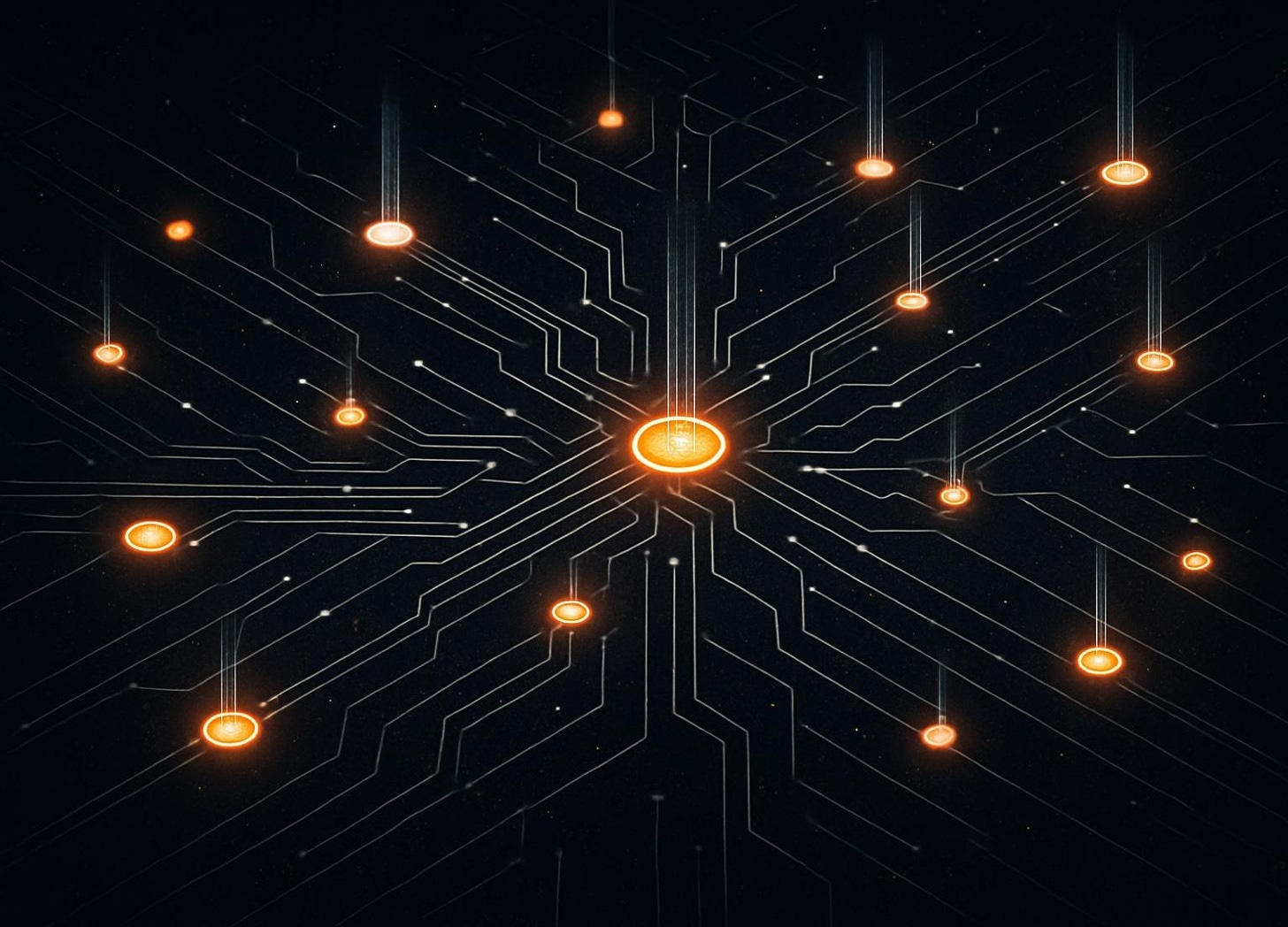
I’ve approached the simulation hypothesis as a proposal that reality could be the result of computation, not just physical interaction. While this idea sounds speculative, several frameworks offer testable mechanisms. In digital physics, the universe is treated as a discrete network of interacting bits, similar to a giant cellular automaton. Each bit, or node, updates according to local rules, and complex phenomena like gravity or electromagnetism emerge from these updates.
The holographic principle adds that all the information within a volume of space can be encoded on its boundary, much like a hard drive stores data on its surface. This suggests that the universe could be a kind of information register, with each Planck area encoding a bit. In this view, the mass–energy–information equivalence principle unifies information with more traditional physical quantities, implying that information has real, measurable effects.
When I work with quantum information theory, I reframe quantum states as patterns of information. The Cellular Automaton Interpretation of quantum mechanics, developed by ‘t Hooft, treats quantum states as emergent from deterministic, discrete rules. This approach shows how randomness and probability in quantum systems can arise from underlying code-like structures.
Operational analogies, like finite element meshing or entropy-minimizing flows, help visualize how local update rules could generate the universe’s apparent complexity. Symmetry, often seen as a hallmark of elegance in physics, is interpreted as a sign of efficient information encoding: the more symmetric a system, the fewer bits needed to describe it.
Despite these advances, current computational models struggle to reproduce some features of standard physics, such as continuum symmetries and quantum field interactions. This gap guides ongoing research, as theorists refine their models to better match experimental observations.
“The second law of infodynamics posits a universal tendency for systems to minimize information entropy, framing physical evolution as a process of data compression.” “Symmetry in nature is interpreted as a reflection of informational efficiency, with highly symmetric states requiring less information to encode.”
If these frameworks are correct, every law of nature might be a shortcut in the universe’s code. The next step is to test whether these models can predict phenomena that traditional physics cannot.
Why it matters
🧩 Information-processing rules may underlie physical laws.
💡 Symmetry signals data compression in nature.
🌌 Models like cellular automata generate physics-like behavior from simple rules.
References [1–3]
Experimental Probes and Operational Tests of Information-Based Physics
Testing whether the universe computes reality requires more than clever math. Experimentalists are crafting precision setups to probe if information-processing rules really drive physical phenomena.
From force-noise measurements to quantum entanglement experiments, researchers are hunting for direct links between information entropy and gravity. These tests aim to reveal whether the universe’s code leaves observable fingerprints.
Experimental setups like atom interferometers and force-noise detectors are used to test if changes in information entropy produce gravitational effects, as predicted by information-based physics.
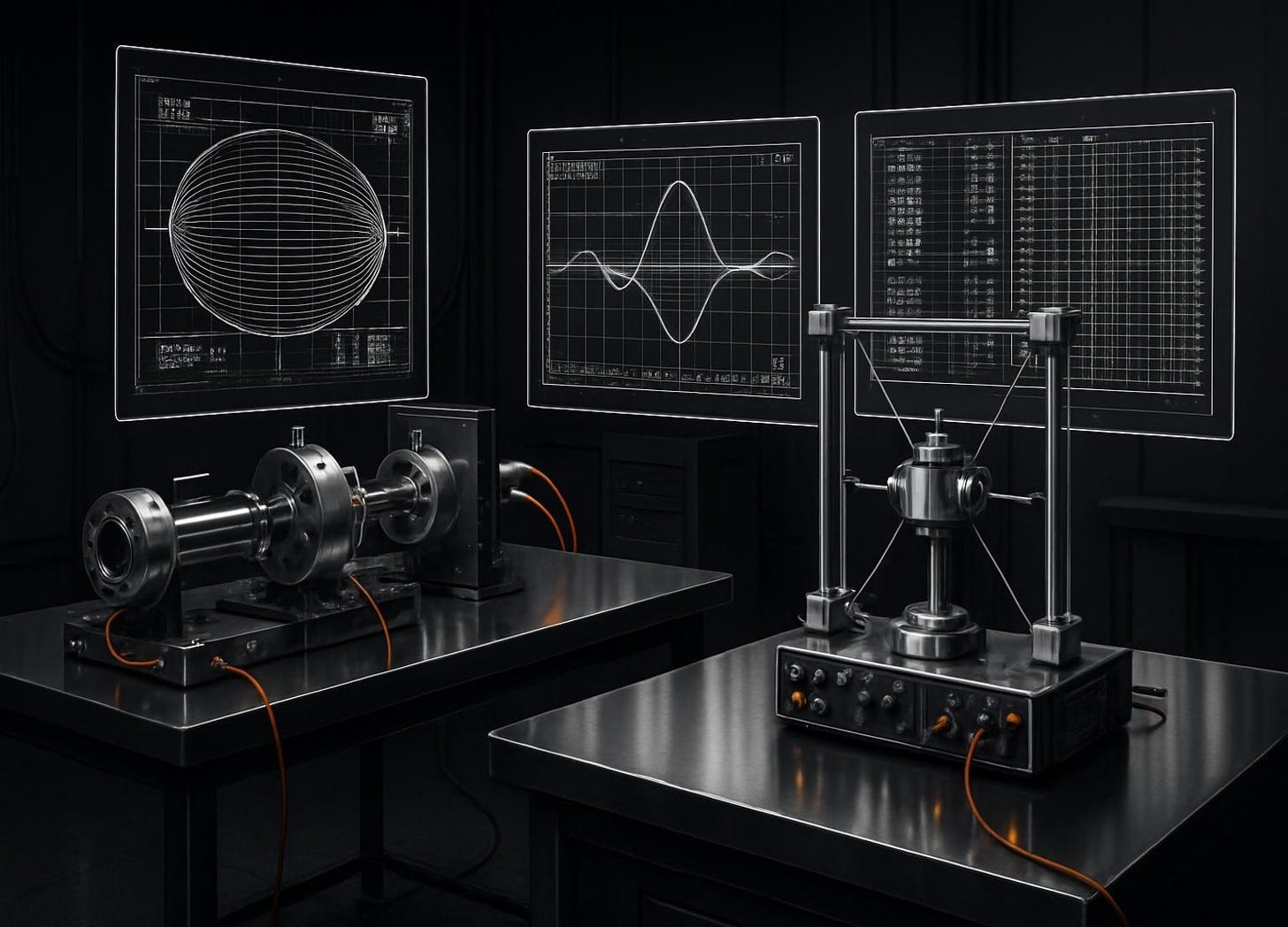
I’ve used experimental approaches like mechanical resonators and atom interferometers to look for correlations between information entropy and gravitational effects. If gravity is truly an entropic force, then changes in information content should create measurable shifts in force noise or decoherence. So far, these effects are predicted to be extremely small, but advances in sensitivity are bringing them within reach.
The Planck-area bit-storage model suggests that space is fundamentally granular, with each tiny area storing one bit. Reconciling this with Lorentz invariance (the symmetry of special relativity) requires that any discreteness be tied to local horizons and only visible at the Planck scale. Observable violations, like quantized gravitational responses or turbulence-induced entanglement breakdown, are expected to be heavily suppressed.
To distinguish information entropy (SInfo) from physical entropy (SPhys), I use protocols like thermal annealing, lattice aggregation, and symbol statistics tracking. These methods reveal that SInfo and SPhys can move in opposite directions or even be nearly conserved in sum. For example, memory systems can show decreasing SInfo as data is compressed, while SPhys increases due to heat dissipation.
Dual-entropy accounting highlights a trade-off: sometimes, optimizing information comes at the cost of increased physical entropy. Experiments designed to probe this balance, such as tuning symmetry or lattice parameters, could reveal new forms of entropy-driven gravitational entanglement.
Despite the challenges, each experiment pushes the boundary between speculation and evidence. If step-like gravitational changes are observed as matter crosses a notional surface, it could signal discrete bit flips in spacetime. That would be a direct sign of the universe’s computational nature.
“Precision force-noise, decoherence, and entanglement experiments can test for measurable correlations between information entropy changes and gravitational effects predicted by entropic or infodynamics-based models.”
Operational tests of information-based physics are still in their infancy. As sensitivity improves, the hope is to catch the universe in the act of computing. One bit at a time.
Why it matters
🔬 Experiments probe if gravity links to information entropy.
🧪 Planck-area models predict granular space at tiny scales.
⚡ Dual-entropy methods track information and physical entropy separately.
References [1–11]
Final Thoughts
I’ve found that theories modeling the universe as an information-processing system rest on a foundation of mathematical symmetry, entropy, and computational analogies. These facts point to a cosmos where data compression, bit storage, and update rules may underlie the familiar laws of physics.
Assumptions about the primacy of information, the equivalence of mass, energy, and information, and the universality of entropy minimization drive these models. Hypotheses range from gravity as an entropic force to spacetime as a discrete bit register. Yet, direct experimental confirmation remains elusive.
Open questions persist. Can future experiments detect information-driven gravitational effects? Will new symmetries or code-like invariants in nature provide the missing link between computation and reality? The search continues, blending analytic rigor with curiosity about the architecture of existence.
Quick Recap
🧠 The universe may operate as a computational system.
🔬 Information theory and entropy shape physical laws.
🧩 Experiments probe links between information and gravity.
💡 Symmetry and bit storage hint at hidden code in nature.
👉 Each week you’ll receive one email with ideas, digital material, and tips from my lab. As a PhD engineer, I’ve built the mindset to decode and build upon intricate systems and theories — and I’ll help you do the same.
💡 Join the debate. Share your take on whether the universe runs on code or chaos. Challenge the assumptions, bring your evidence, and help shape the next wave of discovery!
🧑🏼 Follow @drxwilhelm on X Twitter, Substack, Medium, TikTok, YouTube
Glossary
Digital Physics: A field proposing that reality is fundamentally discrete and operates like a computational system.
Infodynamics: A theoretical framework treating information entropy as a physical law guiding system evolution.
Quantum Information Theory: The study of how quantum systems process, store, and transmit information.
Cellular Automaton: A grid-based computational model where simple rules produce complex behavior, used to simulate physical laws.
Holographic Principle: The idea that all information contained within a volume can be described by information encoded on its boundary.
Planck Area: The smallest meaningful area in physics, thought to encode one bit of information in some models.
Lorentz Invariance: A symmetry principle stating that the laws of physics are the same for all observers moving at constant velocities.
Entropic Gravity: A hypothesis that gravity emerges from statistical tendencies of information entropy.
Dual-Entropy Accounting: A method of separately tracking information entropy and physical entropy in experiments.
Mass–Energy–Information Equivalence: A principle proposing that information, like mass and energy, is a physical quantity with real effects.
Sources & References
Vopson MM. The Second Law of Infodynamics and Its Implications for the Simulated Universe Hypothesis. 2023.
Vopson MM. Is Gravity Evidence of a Computational Universe. 2025.
‘t Hooft G. The Cellular Automaton Interpretation of Quantum Mechanics. 2016.
Carney D. On the Quantum Mechanics of Entropic Forces. 2025.
Jacobson T. Thermodynamics of Spacetime – The Einstein Equation of State. 1995.
Haramein N. Quantum Gravity and the Holographic Mass. 2013.
Eleftherios G. Winterberg’s Conjectured Breaking of the Superluminal Quantum Correlations Over Large Distances. 2008.
Haramein N; Val Baker A. Resolving the Vacuum Catastrophe – A Generalized Holographic Approach. 2019.
Haramein N. The Unified Spacememory Network – From Cosmogenesis to Consciousness. 2016.
Haramein N. The Origin of Mass and the Nature of Gravity.
Baez JC. What Is Entropy. 2024.
The Vedic literature of India would agree with you and it's own way!
@Michael Eric West