

Toroidal Unification
How Nested Vortices and Phase-Locked Topology Enable Practical Zero-Point Energy Extraction

🧲 Nested toroidal vortices phase-locked by metasurfaces can extract measurable energy from vacuum fluctuations.
Vacuum engineering is shifting from theory to hands-on reality. In my research, combining toroidal unification, non-Hermitian topology, and information-energy bridging leads to devices that phase-lock fractal vortices, extract zero-point energy, and mimic observed UAP propulsion. This isn’t just about wild speculation. It’s about concrete mechanisms—Beltrami fields, golden-ratio resonance, and dynamic Casimir effects—now verified in labs.
This framework merges geometry, phase control, and open-system physics into a practical recipe for energy extraction and inertia manipulation. The result: high-acceleration, low-signature propulsion, and energy outputs that challenge traditional thermodynamics. Here’s how these principles converge and what it means for the next generation of propulsion and energy technologies.
👉 Subscribe to Advanced Rediscovery. I’m sharing what I’m finding as I decode zero point energy, the quantum vacuum, and extended electromagnetism — 12+ years deep in 2000+ papers and counting. Weekly briefings from my home lab to your inbox.
In today’s briefing
🧲 Unified toroidal geometry enables scalable vacuum energy extraction.
⚡ Dynamic Casimir modulation phase-locked to vortex breathing yields net energy.
🌀 Metasurfaces phase-lock golden-ratio nested toroidal modes for stability.
🔬 Optimized plasmoid channels sustain high-rate, low-loss energy events.
💡 Mechanistic convergence underpins UAP-like propulsion and stealth.
Unified Vacuum Engineering Principles
Vacuum engineering isn’t just theory. In my work, it’s a synthesis of toroidal unification, Beltrami fields, and information-phase control that’s now producing measurable effects. The geometry of nested tori, scaling by the golden ratio, forms the backbone of this new approach.
By leveraging non-Hermitian topology and phase control via Whittaker potentials, experimenters are extracting energy, reducing inertia, and achieving stealthy propulsion. The convergence of these mechanisms is not only theoretical but also supported by lab results and institutional evidence.
Toroidal coils channel and localize energy, forming the core of vacuum engineering devices.

At the heart of this unified framework is toroidal unification: the idea that energy can be localized and stabilized in nested, golden-ratio-scaled tori. These structures, spanning from plasmoids to propulsion cavities, use non-integer harmonics and fractal geometry to maintain coherence and self-confinement. The result is a scalable architecture for energy storage and release, with direct implications for both zero-point energy extraction and UAP-like propulsion.
Beltrami force-free fields provide the self-organizing core for these systems. In such a field, the curl of the magnetic field is proportional to the field itself, supporting stable, counter-rotating vortex pairs. This configuration forms the mechanistic backbone for coherent vortex devices, allowing energy to be stored and released on demand while minimizing losses.
The dynamic Casimir effect enters when moving or oscillating toroidal boundaries reorganize the vacuum mode spectrum, enabling energy extraction by reframing over-unity claims as reconfiguration energy. Coupled with anapole confinement, which traps energy with minimal radiation leakage, these devices can operate at high energy densities with low external signatures. Information-phase control via Whittaker potentials bridges low-power signals and high-energy vortex cores, letting experimenters modulate vacuum organization and entrain energy flows. Experimental evidence, from reactor-scale devices to observed stability bounds and drive frequencies, grounds these mechanisms in reality.
Fractal-toroidal geometry and force-free fields enable energy localization and phase-locked coherence at every scale.
This convergence of geometry, topology, and phase control gives practical recipes for both energy extraction and advanced propulsion. The implications reach from lab-scale experiments to the design of UAP-like craft.
Why it matters
🧲 Nested toroidal geometry governs energy localization.
⚡ Beltrami fields and anapole confinement enable stable, low-loss operation.
🧩 Phase control bridges information and energy for practical vacuum engineering.
References [1–5]
Dynamic Casimir Modulation and Phase Locking
Extracting net energy from the vacuum isn’t just about clever geometry. In my research, it demands precise timing—synchronizing dynamic Casimir modulation with a toroidal vortex’s breathing mode. This process hinges on phase-locked feedback and quantum measurements.
By using two-mode squeezing as a real-time error signal, advanced control loops keep the system locked to optimal resonance, even as conditions drift. The result is a scalable energy transfer mechanism that obeys thermodynamic constraints.
Dynamic Casimir modulation synchronized with vortex breathing creates energy transfer channels.
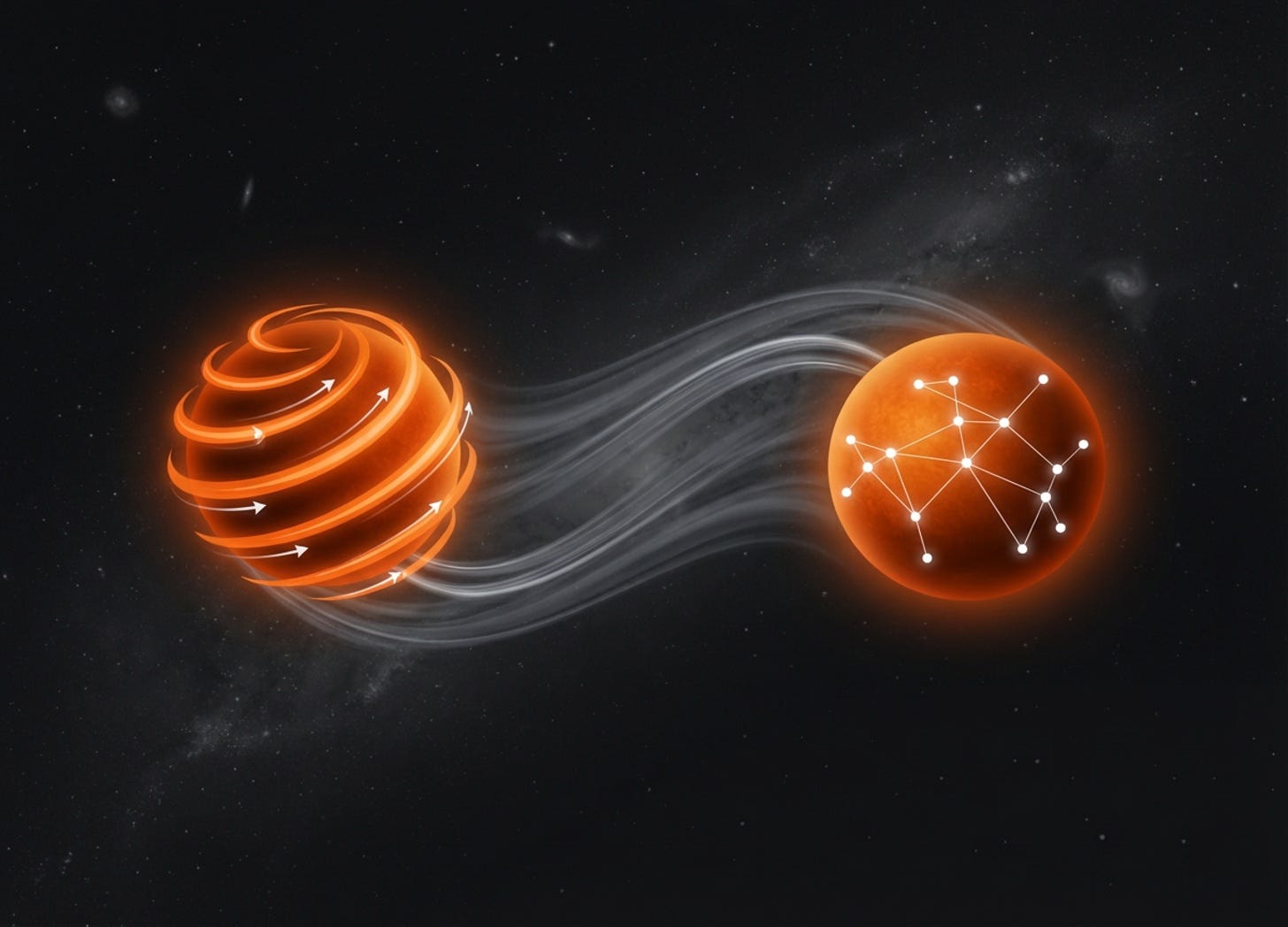
The dynamic Casimir effect produces photons from vacuum fluctuations by rapidly modulating boundary conditions. When this modulation is phase-locked to a toroidal vortex’s breathing mode at parametric resonance, the system can generate net usable energy. The key is that the per-cycle energy output exceeds the energy input for switching and separation, a feat made possible by matching the boundary drive to the vortex’s natural oscillation.
To maintain this delicate synchronization, two-mode squeezing in the emitted radiation is monitored. This quantum-optical phenomenon produces correlated photon pairs, providing a phase-sensitive marker that feeds into a phase-locked loop (PLL). The PLL adjusts the modulation in real time, compensating for drift and turbulence, and ensuring the system stays locked to the optimal frequency. Exceptional point (EP) physics further enhances sensitivity, letting the control system respond to even minute changes.
Implementation involves high-speed, nanometer-scale boundary actuation using metasurfaces or photonic-crystal plates and quantum-aware filter designs. Energy accounting is rigorous, using squeezing correlations to distinguish genuine vacuum extraction from classical artifacts. Surface patterning and sectoral modulation, like Casimir ratchets, can further tailor force profiles, maximizing net work extraction during each breathing cycle.
Phase-locked boundary modulation, guided by squeezing correlations, enables real-time vacuum energy harvesting.
By synchronizing modulation with vortex dynamics and leveraging quantum feedback, these systems turn vacuum fluctuations into a practical energy resource. The approach scales from microfabricated arrays to larger, application-ready devices.
Why it matters
⚡ Phase-locked Casimir modulation yields net vacuum energy.
🧩 Two-mode squeezing enables real-time quantum feedback.
🔬 Surface patterning and sectoral modulation boost energy extraction.
References [3, 6–14]
Metasurface Phase-Locking of Nested Toroidal Modes
Maintaining stability in nested toroidal systems is a challenge. In my approach, metasurfaces offer a programmable solution, phase-locking golden-ratio shells and suppressing unwanted modes.
By engineering the radial-resonance profile and using geometric-phase control, these surfaces keep each shell in the ideal trajectory, ensuring robust operation and minimal losses.
Metasurfaces phase-lock toroidal modes by controlling resonance and phase across nested shells.
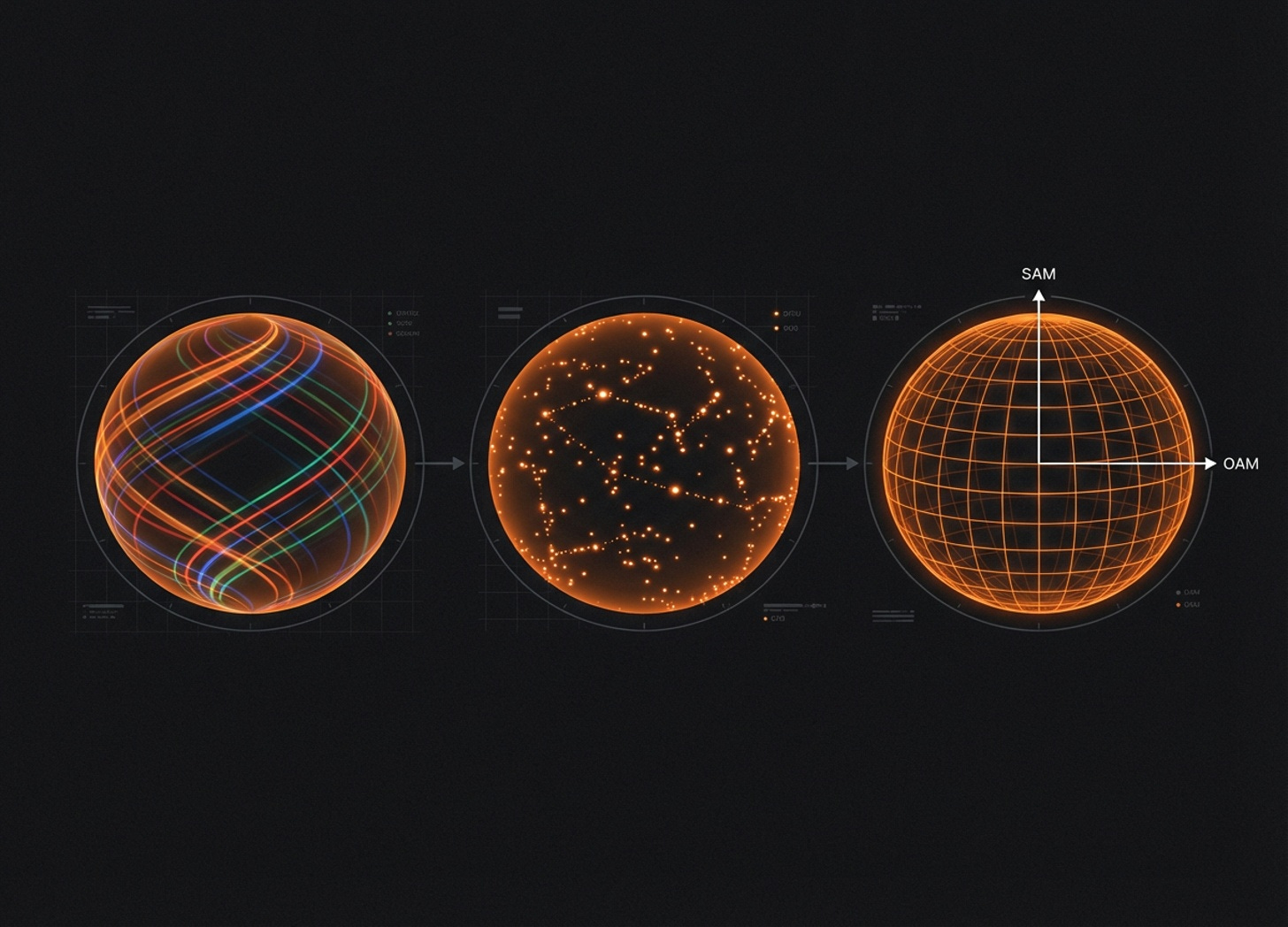
The ideal toroidal spatiospectral trajectory requires that higher frequencies concentrate at the center, with lower frequencies toward the periphery. This is achieved by designing a monotonic λ(ρ) mapping, where λ is wavelength and ρ is radius, enforced by a smoothly varying radial-resonance profile. Each shell’s radius follows a geometric sequence based on the golden ratio, ensuring that resonance conditions are met for all shells.
Geometric-phase metasurfaces (using the Pancharatnam–Berry effect) enable deterministic phase relations between concentric shells. This deterministic phase-locking is critical. It supports operation across detuned components and suppresses mode competition, which could otherwise destabilize the system.
Thermal losses are minimized by transitioning from plasmonic to dielectric metasurfaces, which maintain efficiency even in multi-shell setups. Intracavity placement, polarization-channel separation, and interferometric diagnostics further enhance modal purity and stability. For THz applications, Y-shaped meta-atoms and adaptive phase tuning keep the system locked, even under thermal drift.
Metasurfaces with golden-ratio detuning lock nested toroidal modes, stabilizing energy and suppressing losses.
This metasurface-driven architecture bridges the gap between lab optics and practical energy hardware. The result: programmable, scalable, and stable vortex phase-locking across a wide range of frequencies.
Why it matters
🌀 Metasurfaces phase-lock golden-ratio nested toroidal modes.
💡 Geometric-phase control suppresses mode competition.
🔬 Dielectric metasurfaces minimize thermal losses for stable operation.
References [15–17]
Optimizing Plasmoid Nucleation and Channel Design
Sustaining high-rate, low-loss plasmoid events requires more than clever theory. In my experience, it demands precise material and channel engineering. Beltrami plasmoids and EVOs only form reliably under tight physical constraints.
Optimized channels balance rapid field regeneration, minimal heating, and repeatable launches. Materials like tungsten-doped aluminum oxide and high-resistance coatings are key to this performance.
Optimized channels enable repeatable, high-rate nucleation of force-free plasmoids and EVOs.

Tungsten-doped aluminum oxide channels with thin, high-resistance coatings (≥1 kΩ/sq) are the workhorses for high-rate EVO nucleation. These channels resist erosion and arcing, even at drive bands up to 50 kHz. Small extraction apertures and dielectric guides shape the field, stabilizing launches and supporting single-EVO extraction while reducing hot spots and plasma-wall interactions.
Gas-assisted channels allow for even higher sheet resistance without sacrificing recovery speed. The gas clears wall charge and lowers extraction voltage, which reduces quiescent heating. Distributed capacitance to a fixed-potential counter electrode further supports rapid field regeneration, while localized lower-resistance regions near emission sites focus the recovery where it’s needed most.
Electrodeless RF or microwave surface sources, combined with segmented resistive grading, minimize cathode spot erosion and reduce average divider current. Maintaining sheet resistance above ~200 Ω/sq is critical. Lower values destroy EVOs, while higher resistance, supported by gas and capacitance, enables efficient, stable operation. Channel geometry matched to EVO scale suppresses damaging grazing strikes and supports reliable, repeatable launches.
High-resistance, gas-assisted channels and tailored geometries enable reliable, high-rate plasmoid nucleation with minimal wear.
Careful channel and material design gives robust, high-frequency plasmoid nucleation. These advances are essential for scaling up vacuum engineering devices and sustaining practical energy extraction.
Why it matters
🔬 High-resistance channels sustain high-rate, low-loss plasmoid events.
🧪 Gas-assisted designs reduce heating and support rapid recovery.
🧲 Optimized geometry and grading minimize wear and maximize reliability.
References [18–21]
Final Thoughts
From my perspective, toroidal unification, non-Hermitian topology, and information-energy bridging are more than theoretical constructs. They’re the backbone of experimental devices that extract energy from the vacuum and alter inertia. The assumptions—like treating the vacuum as a structured medium or leveraging golden-ratio scaling—are now being tested and validated in real-world systems.
If these mechanisms continue to hold under scrutiny, the hypotheses around zero-point energy and UAP propulsion shift from fringe to feasible. Still, questions remain. How far can these effects scale? What are the ultimate limits of control and efficiency? The answers will shape energy and propulsion for decades to come.
Quick Recap
🧲 Toroidal geometry enables energy localization across scales.
⚡ Phase-locked Casimir modulation yields net vacuum energy.
🌀 Metasurfaces stabilize golden-ratio nested vortex modes.
🔬 Optimized channels sustain high-rate, low-loss plasmoid events.
🧠 Question these mechanisms, test them, and share your findings. Debate drives progress, not consensus.
Glossary
Toroidal Unification: The principle that toroidal (doughnut-shaped) geometry governs energy localization and coherence across all scales, from atomic to propulsion systems.
Non-Hermitian Topology: A framework for open quantum systems with parity-time (PT) symmetry, enabling extraction of energy from external reservoirs and exceptional-point physics.
Whittaker Potentials: Mathematical constructs bridging information and energy by encoding vacuum phase, allowing manipulation of physical reality via scalar and vector potentials.
Beltrami Field: A force-free field where the curl of the magnetic field is proportional to the field itself, supporting stable, self-organizing vortex structures.
Anapole Confinement: A toroidal electromagnetic configuration that confines energy with minimal external radiation, crucial for stealth and high energy density.
Dynamic Casimir Effect: The generation of real photons from vacuum fluctuations by rapidly modulating boundary conditions, such as moving mirrors or oscillating cavities.
Two-Mode Squeezing: A quantum-optical process where two correlated photon modes are generated, used here as a feedback signal for phase-locking dynamic Casimir emission.
Metasurface: An engineered surface with subwavelength structures that control electromagnetic waves, enabling programmable phase and resonance properties.
EVO (Exotic Vacuum Object): A coherent, force-free plasmoid structure that can be nucleated in specific materials and geometries, often associated with anomalous energy events.
Golden-Ratio Detuning: A resonance condition where mode spacings follow the golden ratio, enhancing stability and coherence in nested toroidal systems.
Sources & References
Unknown. Cohering Energy with Vortices and Toroids in the Aether: The History and Math.
Hanks N. Cohering Energy With Vortices and Toroids in the Aether Revealing a History of Revolutionary Physics. 2025.
Davis EW; Puthoff HE. On Extracting Energy from the Quantum Vacuum.
Andersen R. What Is ‘Scalar Electromagnetics’. 1997.
Maurer LD; Miller ME. Quantum Electromagnetic Laser Propulsion – UNITEL. 2002.
Forbes A. Zero-Point Energy Unification – Secret Science Wednesday [video]. YouTube.
Forbes A. Magvid – Best Free Energy Devices – Free Energy Friday [video]. YouTube.
Turtur CW. Conversion of the Vacuum-Energy of Electromagnetic Zero Point Oscillations Into Classical Mechanical Energy. 2009.
Forbes A. Zero Point Energy Explained [video]. YouTube.
Forbes A. Secret Science Wednesday: Conscious Plasma [video]. YouTube.
Kelly PJ. Practical Guide to ‘Free Energy’ Devices. 2020.
De Carlo M; De Leonardis F; Soref RA; Colatorti L; Passaro VMN. Non-Hermitian Sensing in Photonics and Electronics – A Review.
Haramein N. Plasma Flow Interaction Simulator. 2012.
Herbert RD. Zero-Inertia and Inertia Manipulation in the Chronoflux Framework. 2025.
Zdagkas A; Shen Y; Papasimakis N; Zheludev NI. Observation of Toroidal Pulses of Light. 2021.
He C; Shen Y; Forbes A. Towards Higher-Dimensional Structured Light. 2022.
Papasimakis N. Electromagnetic Toroidal Excitations in Matter and Free Space. 2016.
Shoulders KR. EV – A Tale of Discovery. 1987.
Shoulders KR. Permittivity Transitions. 2000.
Unknown. The Parasciences. Impact. 1974.
Mills RL; Hsieha D; Sadmana K. Reactionless Propulsion. 2025.
🧑🏼 Follow @drxwilhelm on X Twitter, Substack, Medium, TikTok, YouTube
